
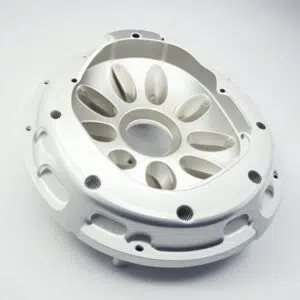
# Precision CNC Machined Components for Industrial Applications
## The Importance of CNC Machining in Modern Manufacturing
CNC machining has revolutionized the manufacturing industry by providing unparalleled precision and repeatability in producing complex parts. CNC machining parts are essential components in various industrial applications, from aerospace to medical devices. The technology allows for the creation of intricate designs with tight tolerances that would be impossible to achieve through conventional manufacturing methods.
## Understanding CNC Machined Components
CNC (Computer Numerical Control) machined parts are manufactured using pre-programmed computer software that controls the movement of factory tools and machinery. This process can be used to control a range of complex machinery, from grinders and lathes to mills and routers. With CNC machining, three-dimensional cutting tasks can be accomplished in a single set of prompts.
### Key Characteristics of Quality CNC Machined Parts:
– High dimensional accuracy
– Excellent surface finish
– Consistent quality across production runs
– Ability to maintain tight tolerances
– Compatibility with various materials
## Materials Used in CNC Machined Components
CNC machining can work with a wide variety of materials, each offering unique properties for different industrial applications:
Keyword: CNC machining parts
### Metals:
– Aluminum (lightweight and corrosion-resistant)
– Stainless steel (durable and resistant to corrosion)
– Titanium (high strength-to-weight ratio)
– Brass (excellent machinability)
– Copper (superior electrical conductivity)
### Plastics:
– ABS (impact resistant)
– Nylon (wear resistant)
– PEEK (high temperature resistance)
– Polycarbonate (optical clarity)
– PTFE (chemical resistance)
## Applications of CNC Machined Parts Across Industries
CNC machining parts serve critical functions in numerous industrial sectors:
### Aerospace Industry
The aerospace sector demands components with extreme precision and reliability. CNC machining produces aircraft parts that must withstand harsh conditions while maintaining perfect functionality.
### Automotive Sector
From engine components to custom car parts, CNC machining enables the production of high-performance automotive parts with consistent quality.
### Medical Field
Surgical instruments, implants, and medical device components require the highest levels of precision and cleanliness, making CNC machining the ideal manufacturing method.
### Electronics Manufacturing
CNC machining creates precise housings, heat sinks, and connectors for electronic devices where millimeter-level accuracy is crucial.
## Advantages of CNC Machined Components
The benefits of using CNC machining for industrial parts production are numerous:
1. **Precision Engineering**: CNC machines can produce parts with tolerances as tight as ±0.001 inches.
2. **Repeatability**: Once programmed, CNC machines can produce identical parts repeatedly without variation.
3. **Complex Geometries**: CNC technology can create shapes and features that would be impossible with manual machining.
4. **Material Versatility**: Ability to work with metals, plastics, and composite materials.
5. **Efficiency**: Faster production times compared to traditional methods.
6. **Cost-Effectiveness**: Reduced labor costs and material waste lead to better overall economics.
## Quality Control in CNC Machining
Ensuring the quality of CNC machined parts involves multiple steps:
1. **Design Verification**: CAD models are thoroughly checked before machining begins.
2. **In-Process Inspection**: Measurements are taken during production to maintain quality standards.
3. **Final Inspection**: Finished parts undergo rigorous testing to verify dimensions and functionality.
4. **Surface Finish Analysis**: Ensuring the required surface texture is achieved.
5. **Material Certification**: Verifying that all materials meet specified standards.
## Future Trends in CNC Machining
The CNC machining industry continues to evolve with technological advancements:
– **Automation Integration**: More robotic loading/unloading systems for lights-out manufacturing
– **Smart Machining**: IoT-enabled machines with real-time monitoring and predictive maintenance
– **Advanced Materials**: Development of new alloys and composites for specialized applications
– **Hybrid Manufacturing**: Combining additive and subtractive processes for complex parts
– **Sustainability Focus**: Energy-efficient machines and recycling of machining byproducts
## Choosing the